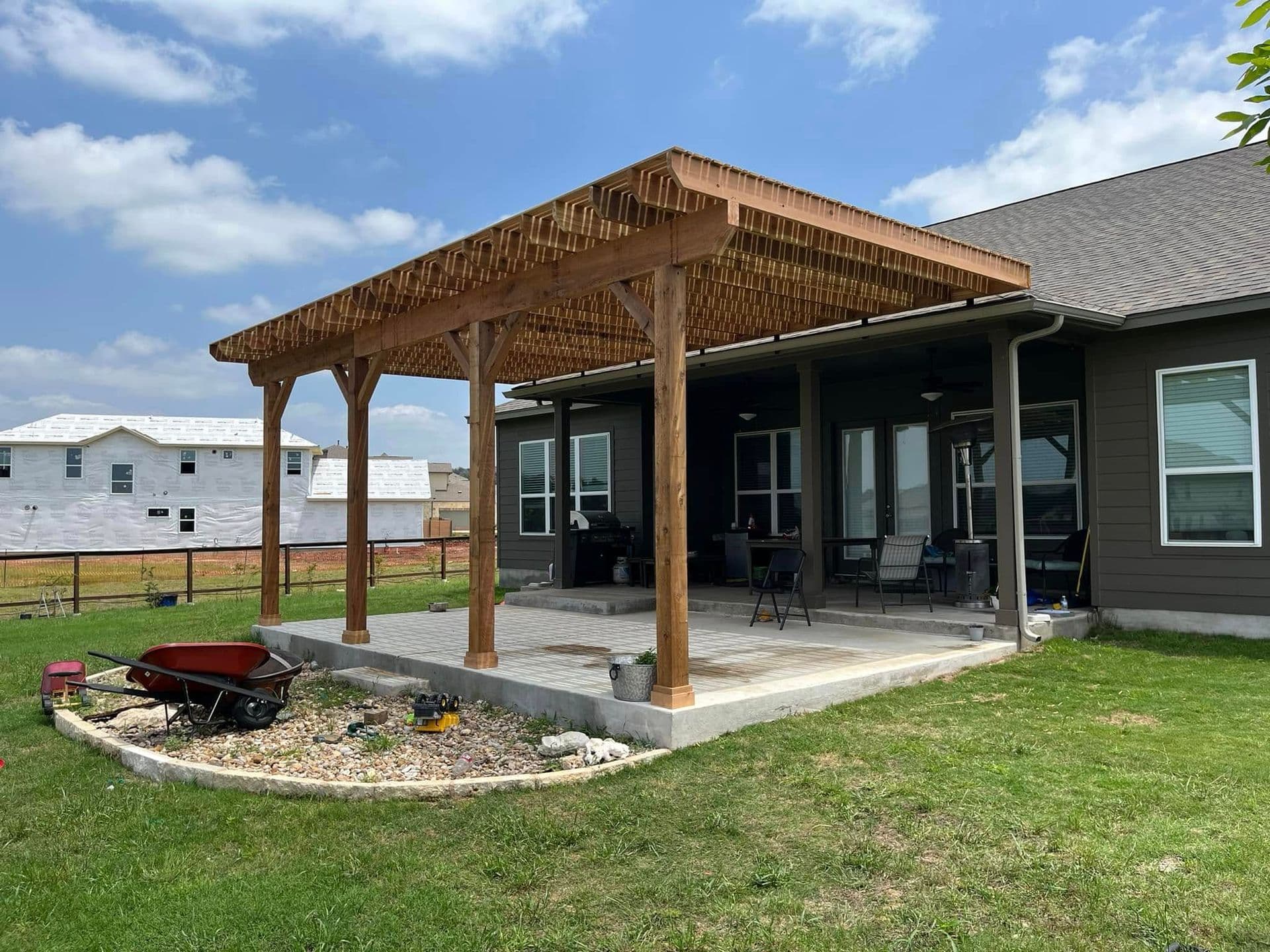
Every pergola in Georgetown needs a city permit, and the review for a pergola or patio cover typically takes about 10 business days through MGO Connect. A freestanding 12x14 cedar pergola runs $14,000 to $22,000, and we handle the permit, the inspections, and any HOA approval as part of the fixed price.
How the Georgetown pergola permit works
The City of Georgetown lists patio covers and pergolas among the projects that require a building permit, and it reviews them under the 2021 International Residential Code. Applications go through the MGO Connect portal. Plan on roughly 10 business days of review for a pergola, which is faster than the 15 to 20 business days the city lists for decks.
Once construction starts, expect three inspections: a pre-pour inspection before concrete goes into the footing holes, a setback check that confirms the structure sits where the plan shows, and a final. We schedule each one and are on site for it.
Sun City and other Georgetown HOAs
Sun City Georgetown reviews exterior changes through its own Modifications Committee, and that approval should be in hand before the city permit goes in. We prepare the drawings, material samples, and site plan the committee asks for and submit them for you. Other Georgetown neighborhoods with architectural review get the same package.
Many Sun City homes are single story with covered back patios. A pergola that extends past that cover adds filtered shade without making the back rooms darker, which a solid roof would do.
Limestone in older areas, clay in newer ones
Georgetown sits right on the line between Hill Country rock and Blackland clay. Older parts of town and the west side often have limestone close to the surface, which we drill for footings. Newer subdivisions to the east are more often on expansive clay, where piers go deeper to get below the soil that moves. The pre-pour inspection checks those holes before any concrete is placed.
Sizing a Georgetown pergola
An attached 10x12 over a back door runs $8,000 to $12,000 and fits a small table. A 14x20 in cedar runs $22,000 to $35,000 and covers dining plus lounge seating. In pine, 168 square feet of framing is 168 times $30 to $45, or about $5,000 to $7,600 before footings, finish, and permits. The same frame in cedar is about $7,600 to $10,900.
Shade direction matters on a west-facing Georgetown patio. Standard rafter spacing blocks about 25 to 50 percent of the sun, tighter spacing reaches roughly 60 to 70 percent, and a retractable canopy can reach 90 percent or more. We set rafter depth and direction from the sun path at your house so the frame shades the hours you actually sit outside.
Cedar is the usual pick because it stays straighter as it dries and lasts 20 to 25 years with a stain every two to three years. If you want lights or a fan, we show the circuit on the permit drawings so the inspector sees it on the same visits.
We Know Georgetown Backyards
Georgetown splits in two below the grass. West of I-35 you often hit limestone a few inches down. East of the interstate, Blackland Prairie clay runs deep. That one fact shapes every deck, patio cover and pergola we build here, along with Sun City's own review step and the historic overlay districts around the Square. We build decks, covered patios, pergolas, gazebos and screened porches across Georgetown from our shop in Liberty Hill.
Permits, HOAs, soil and local building tips for Georgetown
"The first thing I want to know in Georgetown is which side of I-35 you're on. West side, we're usually drilling footings into rock. East side, we're digging through clay that moves every time it rains after a dry spell. A lot of folks here are also done with staining, so composite comes up in almost every conversation."
- Mark Toomey
Why Pergolas Matter Here
Pergolas define outdoor rooms without enclosing them. They're perfect for creating an outdoor dining area, framing a view, or adding vertical interest to a flat yard. The open design allows climbing plants like wisteria or bougainvillea to create natural beauty.
Architectural Impact
A well-designed pergola elevates your entire landscape. It frames views, creates vertical interest, and adds sophistication that flat patios can't match.
Flexible Shade Options
Start with an open pergola and add shade later - retractable canopies or shade sails. Your needs may change; a pergola adapts.
Perfect for Plants
Climbing vines like wisteria, jasmine, or bougainvillea thrive on pergola structures. Create a natural, living shade canopy that blooms seasonally.
Defines Outdoor Rooms
A pergola creates a "ceiling" for your outdoor space without walls. It signals where the living area is, organizing your backyard naturally.