Deck & Porch Railing Installation in Austin
Railings are where safety meets style. Whether you're updating an existing deck, adding railings to a new build, or replacing worn-out balusters, we design and install railing systems that protect your family while enhancing your outdoor space. From classic wood to modern cable systems, we have options for every aesthetic and budget.
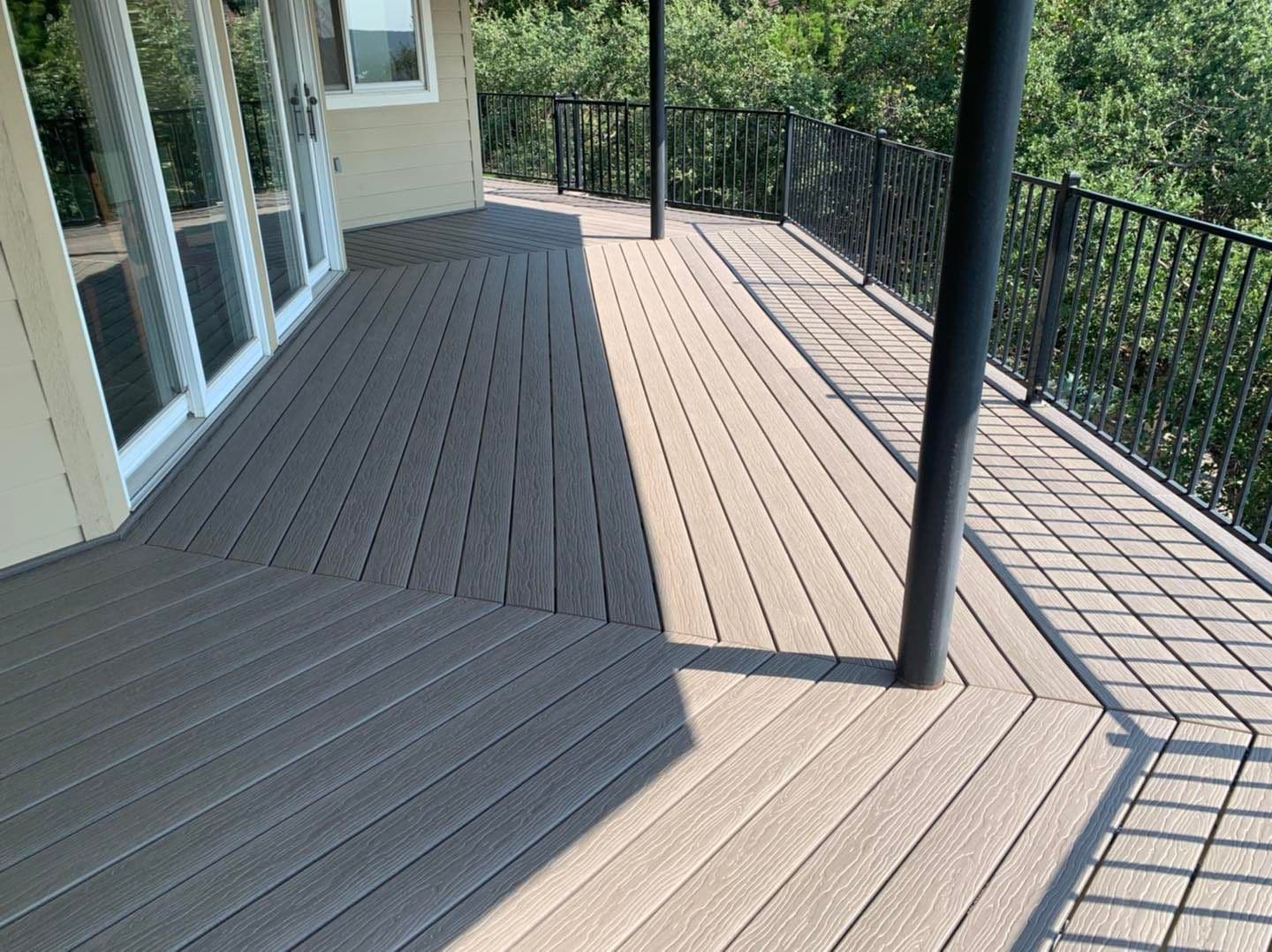
From Our Team on Railings
I've seen too many decks with railings that were afterthoughts - wobbly posts, uneven spacing, and materials that don't match the deck. A good railing should feel solid when you lean against it, meet code requirements for height and baluster spacing, and complement your deck's design. We engineer every railing system for safety first, then make it beautiful. And in Texas, where we have everything from traditional ranch homes to modern builds, the right railing can completely transform how your deck looks and feels.
Why It Matters
Building codes require railings on any deck surface more than 30 inches above grade - but beyond compliance, quality railings prevent accidents and add significant visual appeal. A well-designed railing system can make your deck feel like a true outdoor room while keeping children, pets, and guests safe.
Code Compliant
Every railing we install meets or exceeds local building codes for height, baluster spacing, and load requirements. We handle permits and inspections.
Multiple Material Options
Choose from wood, composite, aluminum, cable, glass, or metal railings. We help you find the perfect balance of aesthetics, maintenance, and budget.
View Preservation
Cable and glass railing systems maintain unobstructed views while providing safety. Perfect for hillside decks and pool areas.
Coordinated Design
We design railings that complement your existing deck, porch, or home architecture. Every detail matters.
Structural Integrity
Our posts are properly anchored and braced. When you lean against our railings, they don't budge.
Low Maintenance Options
Composite and aluminum railings never need staining or painting. They look great for decades with minimal care.
Our Process
Assessment
We measure your deck, discuss your style preferences, and review code requirements for your area.
1 hour
Design & Quote
We provide options with different materials and price points. You see exactly what your railings will look like.
2-3 days
Permits
If required, we pull permits and coordinate inspections. This is typically bundled with deck permits for new builds.
1-2 weeks
Installation
Our crew installs your railing system with precision and care. Most projects complete in 1-3 days.
1-3 days
Final Inspection
We verify code compliance, test stability, and ensure you're completely satisfied.
Same day
Frequently Asked Questions
Custom Railings by City
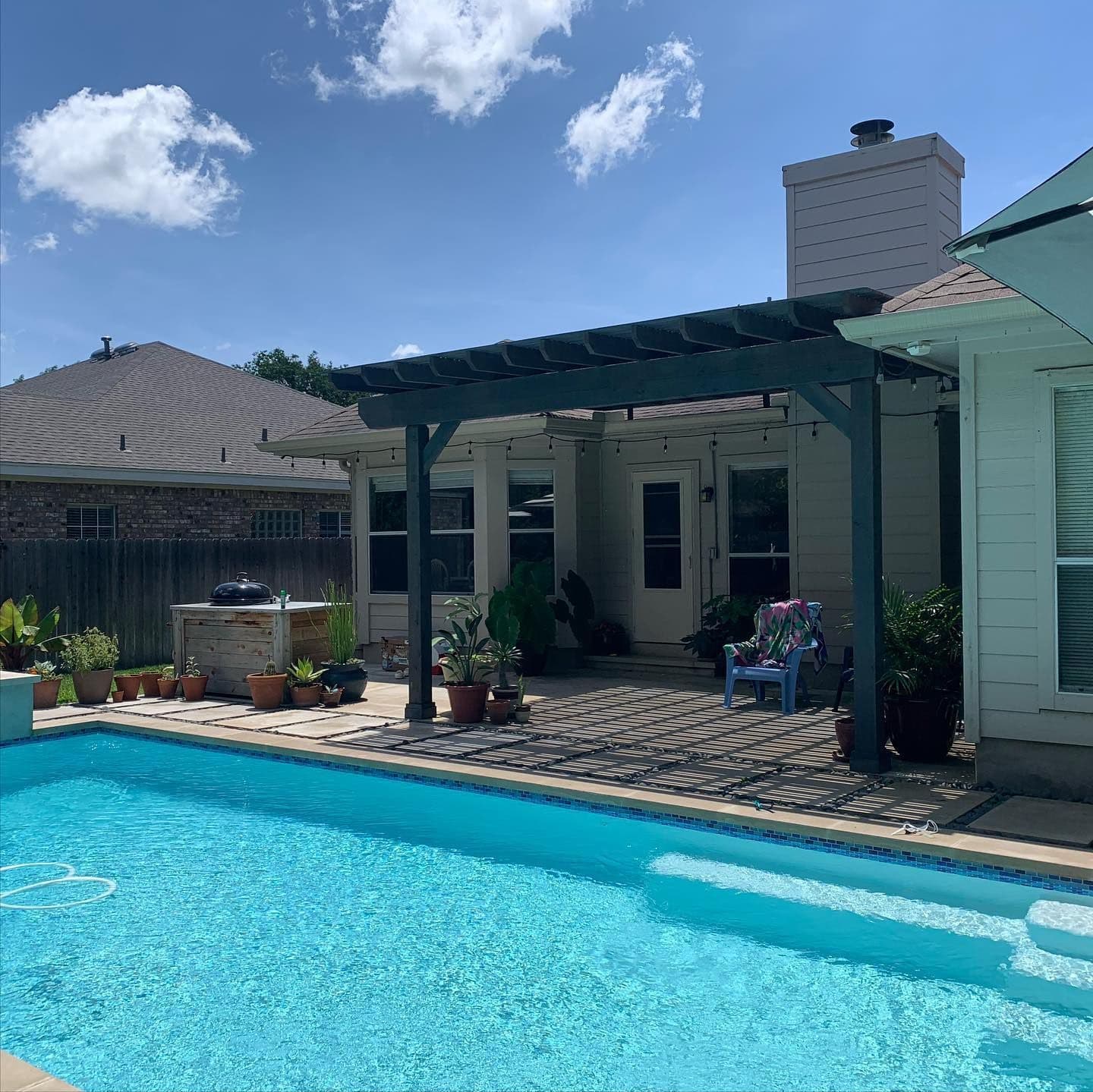
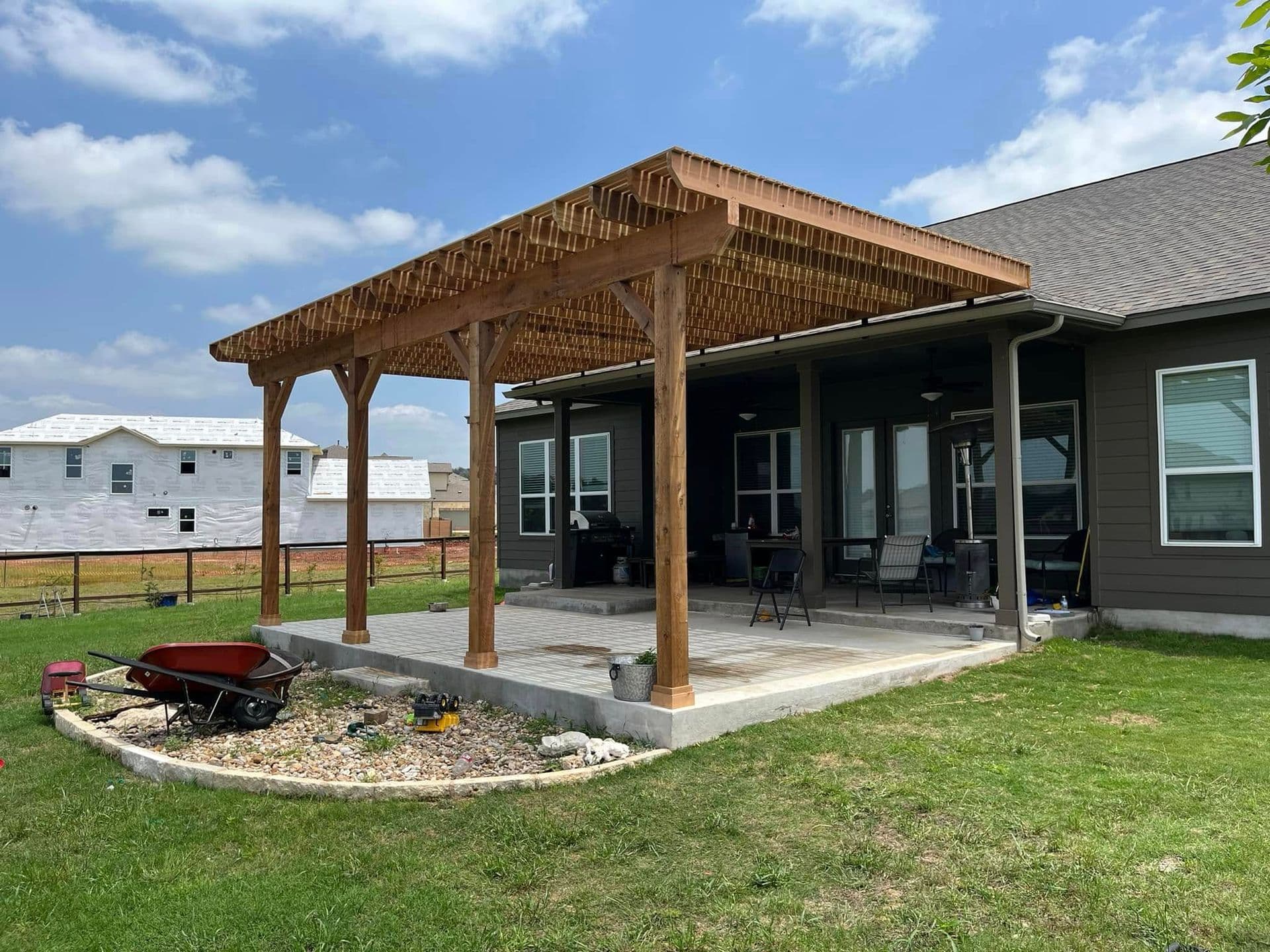
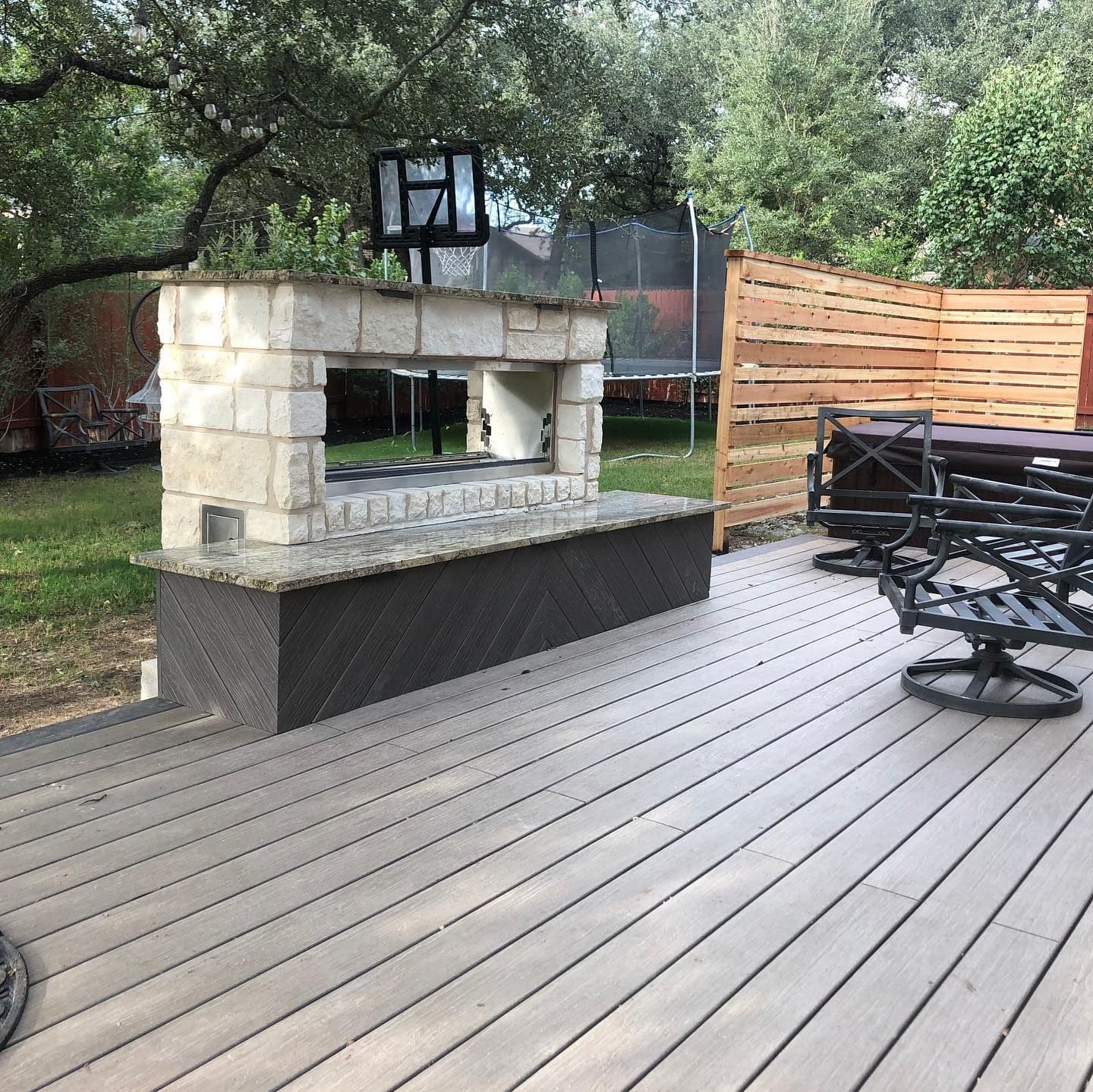
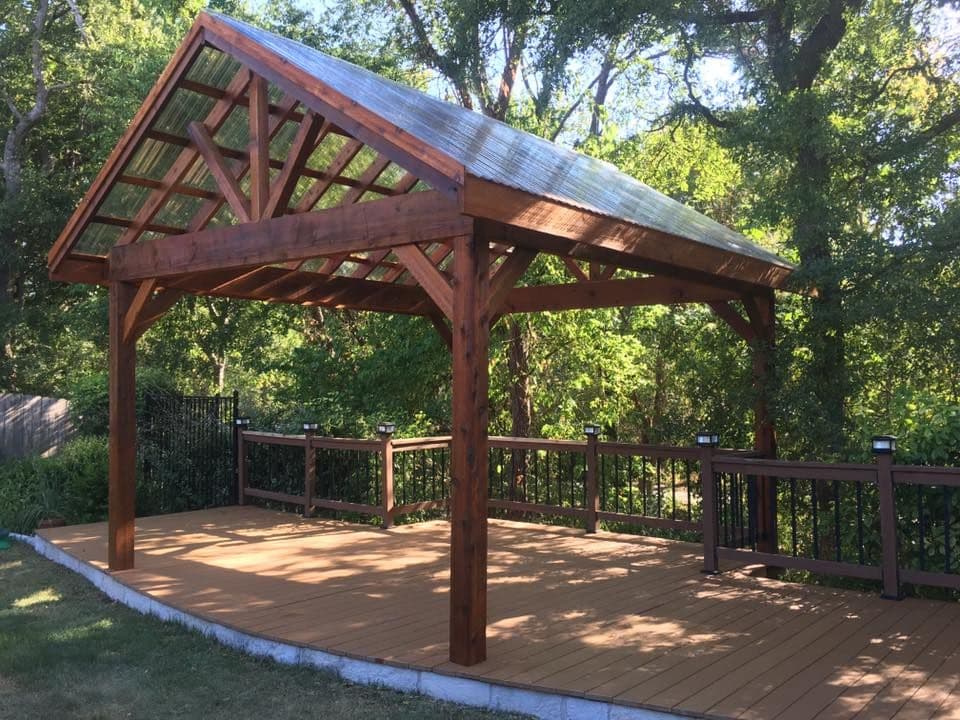
We build custom railings across the Austin metro and Central Texas.
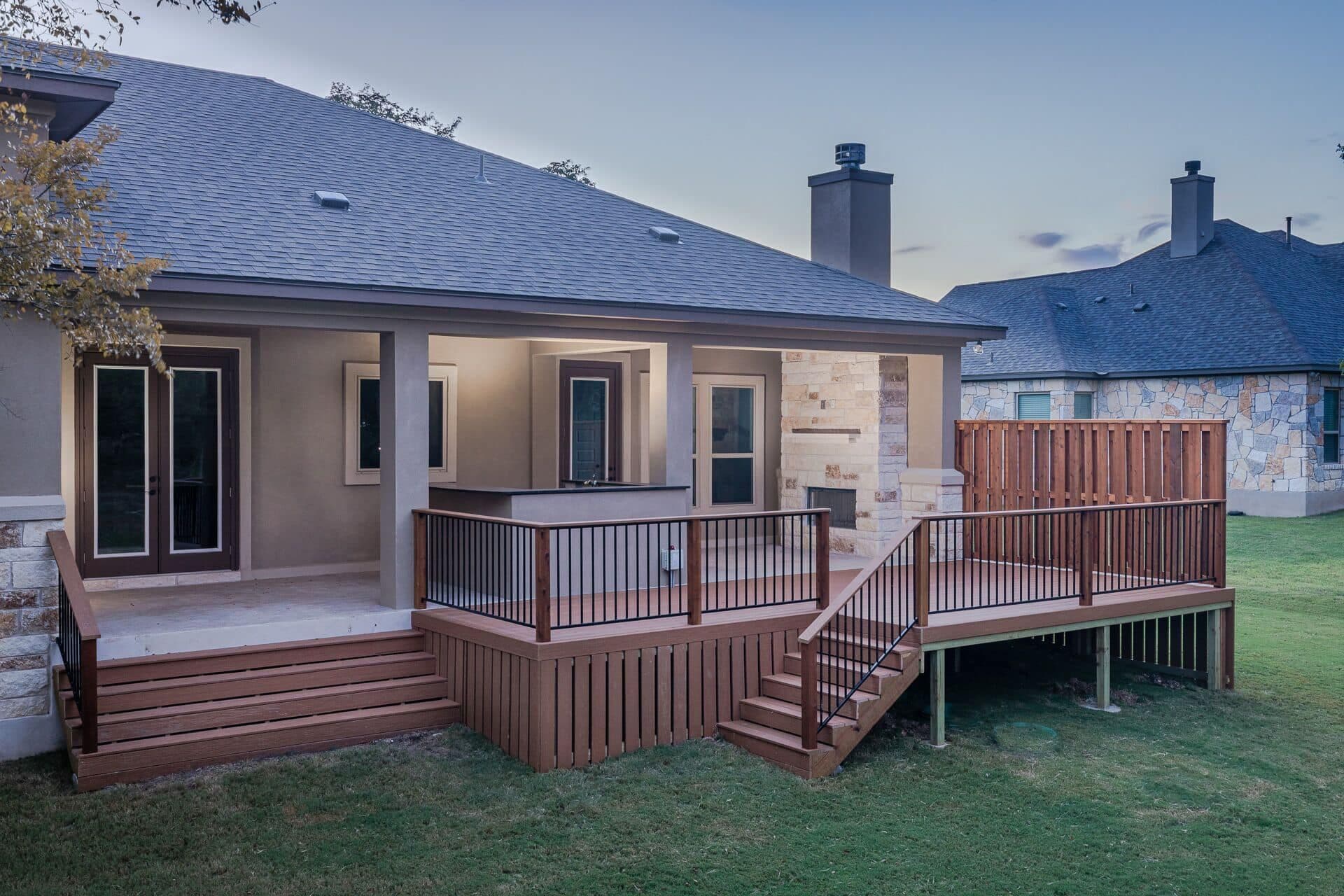
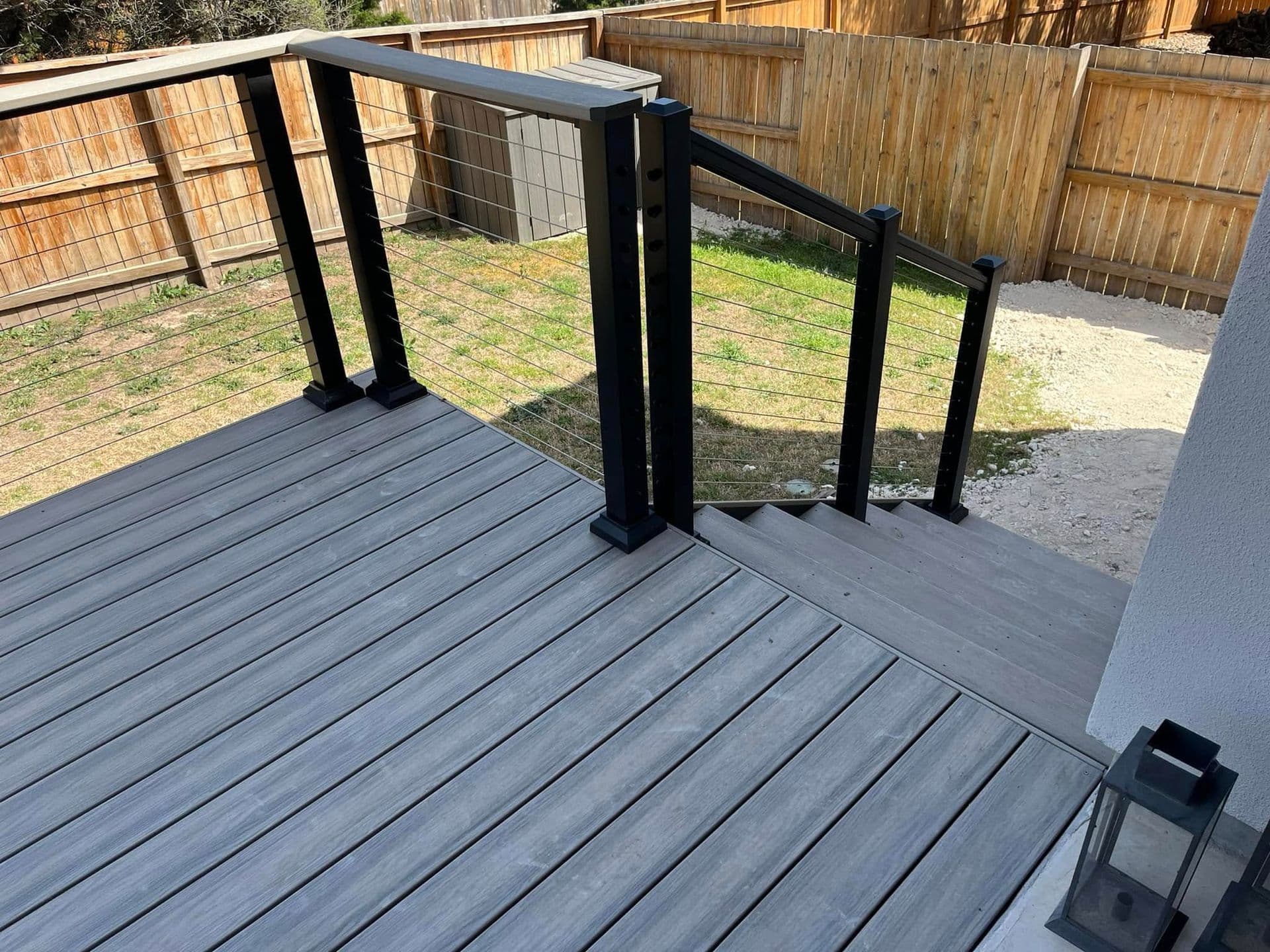
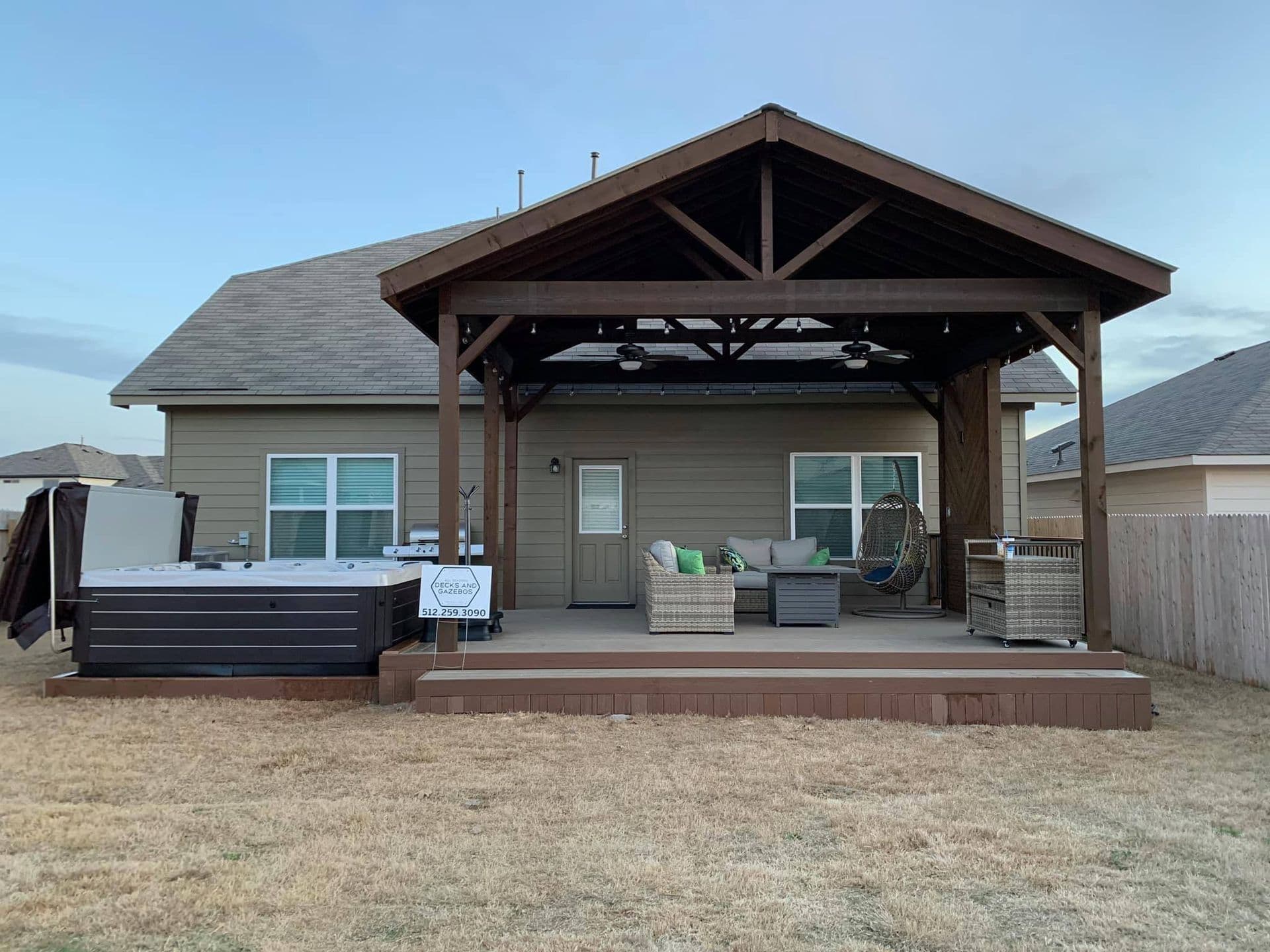
Railing materials compared in Texas heat
Aluminum is the easiest railing to live with in Central Texas. At $40 to $70 per linear foot installed it has a powder-coated finish that does not need paint, will not rot, and lasts 30 years or more. Dark colors do get hot to the touch in direct sun, so a lighter top rail helps on an uncovered deck.
Composite railing at $35 to $60 per linear foot matches composite decking and needs only cleaning. Wood at $20 to $35 per linear foot costs the least up front but needs stain every two to three years, and UV here breaks down finish quickly. Cable railing at $60 to $100 per linear foot uses stainless cable that stays open to the view and needs occasional tensioning.
Here is how that plays out on a typical deck. A 16x20 deck attached along one 20 foot side needs roughly 52 linear feet of railing on the three open sides, before subtracting the stair opening. In composite that is about $1,800 to $3,100. In cable, about $3,100 to $5,200.
Deck railing code basics
The International Residential Code requires a guard on any open side of a walking surface more than 30 inches above the grade below. Most Central Texas cities use it: Round Rock has adopted the 2024 IRC, and Georgetown, Leander, Liberty Hill, and Cedar Park use the 2021 edition, some with local amendments, so we check your city before we build.
The basic numbers are the same in both editions. Residential guards must be at least 36 inches tall, measured from the deck surface. Openings must be small enough that a 4 inch sphere cannot pass through. Guards and handrails must resist a 200 pound load applied at the top in any direction, which is why the post attachment matters as much as the railing itself.
Cable railing has to meet the same 4 inch rule while the cable is pushed. Cable flexes, so it needs tight spacing, strong end posts, and proper tension, or a child can spread two cables apart.
Stairs and handrails
Stairs with four or more risers need a handrail, set 34 to 38 inches above the stair nosings, and shaped so a hand can wrap around it. Open sides of stairs more than 30 inches above grade also need a guard at least 34 inches tall along the stair.
The triangle where the stair tread, riser, and bottom rail meet may be larger, up to a 6 inch sphere, and the rest of the stair guard must stop a 4 3/8 inch sphere. Deck railings often fail inspection on stairs, not the main deck, because the stair run was treated as an afterthought.
Keeping the view
If the deck looks out over Lake Travis, a greenbelt, or the Hill Country, cable or glass keeps the view open. Thin aluminum pickets are a middle option that costs less than cable and still reads lighter than wood balusters. A drink rail on top gives a flat surface without blocking the sight line.
From a seated position your eye sits right around the top rail, so a bulky top rail blocks more than the balusters do. That is one reason cable and slim metal top rails look so much more open from a chair.
Replacing railings on an older deck
Many decks built in the 1980s and 1990s have railings that no longer meet code: 2x2 balusters spaced too wide, rails under 36 inches, and posts notched and bolted at the rim with a single bolt. New railing on that deck has to meet current code, and the posts are usually the weak point.
We check the rim joist and blocking before we quote, because a new railing is only as strong as what it bolts into. On a deck with a sound frame, new railing is one of the best upgrades for the money. Railing replacement to current code on an existing deck runs $35 to $70 per linear foot.
Match the new railing to the deck's future, not just its past. If the boards will be replaced in a few years, pick a railing system that will look right with the new surface, since railing often outlasts the decking under it.