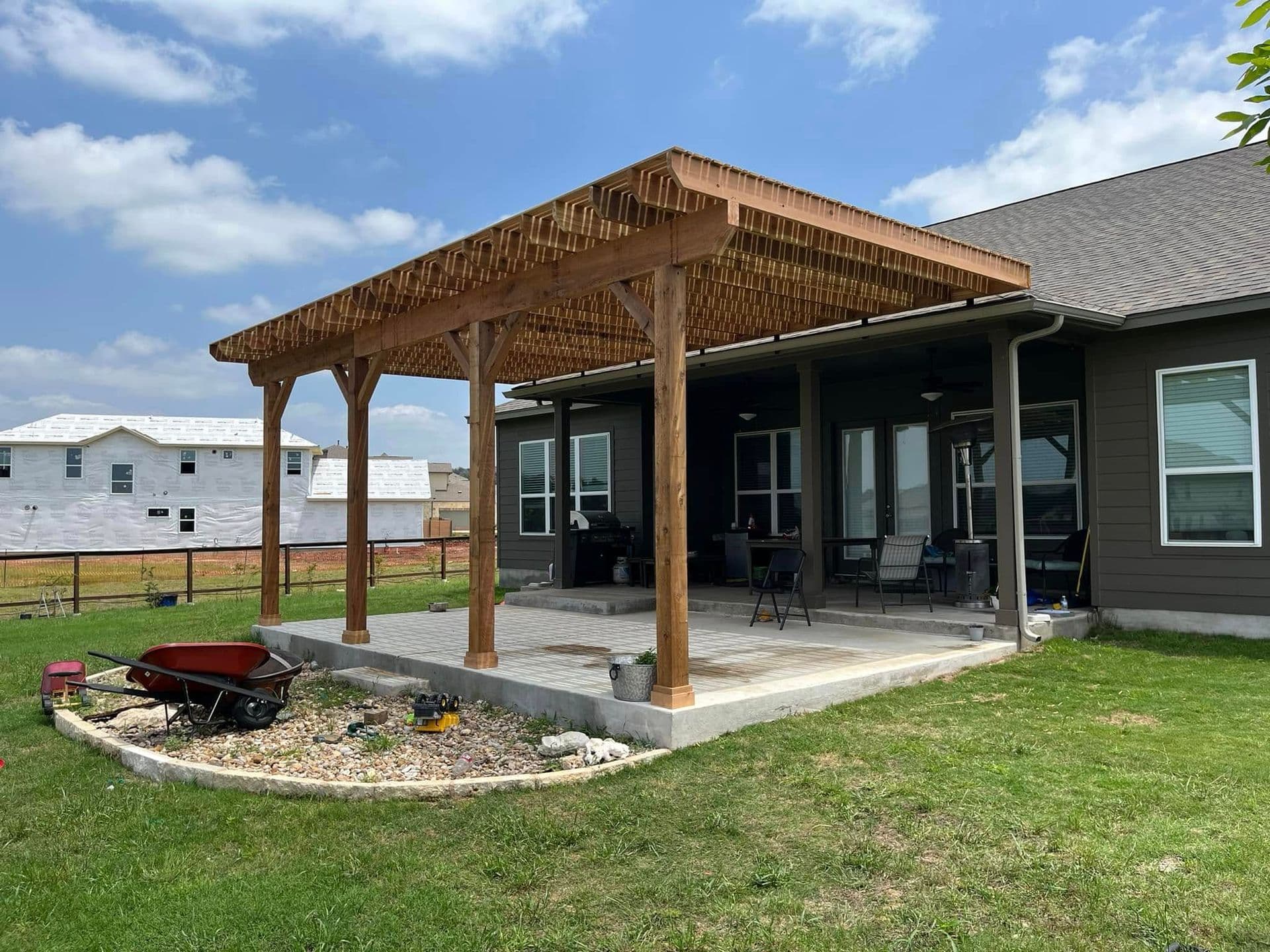
Dripping Springs pergolas tend to be freestanding and out in the open: at the edge of a view, over a fire pit, or at the end of a path away from the house. That setting calls for heavier posts, bracing for open-country wind, and footings drilled into the limestone that sits under most Dripping Springs lots.
Freestanding pergolas on acreage
On a larger lot, the house does not have to be one side of the pergola. We walk the property with you at the time of day you will use it and look at where the sun sets, where the breeze comes from, and what the view is from a seat. A 12x14 cedar pergola runs $14,000 to $22,000, and a 14x20 runs $22,000 to $35,000.
A pergola far from the house needs a plan for power. If you want lights or a fan, trenching for the circuit is a real line item, and we include it in the fixed quote instead of discovering it later.
Size it by use. A 12x14 covers a table for six. A 14x20 fits dining plus a seating group around a fire feature, with the fire kept well clear of the framing.
Wind and footings in Dripping Springs
Open Hill Country land gives wind a long run at the structure. We drill footings into limestone, set posts on steel bases, and add knee braces on taller or larger frames so they stay square. Rocky terrain drains well, but it also means every hole takes a drill, which is part of the footing cost here.
A freestanding pergola has no house to lean on, so its posts carry the wind load alone. That is why we step up post size on tall frames, use steel bases instead of burying wood in the ground, and brace corners where the span calls for it.
Vines and a natural look
Cedar left to weather turns silver gray and suits a ranch or Hill Country house. Many Dripping Springs owners also want a living roof. Crossvine and Carolina jessamine handle our heat well. Lady Banks rose is a good pick too. Wisteria is beautiful but aggressive and needs regular pruning so it does not pull at the rafters. We can add wire or lattice so vines have something to climb.
A vine-covered pergola also gets heavier over the years and holds water after rain, so we size rafters with that load in mind.
Which rules apply to your lot
Permits are issued by the City of Dripping Springs for homes inside its limits. Many properties with a Dripping Springs address are outside city limits, and master-planned communities like Caliterra, Belterra, and Headwaters have their own HOA review. We confirm which rules cover your lot before design.
We Know Dripping Springs Backyards
Dripping Springs is Hill Country on limestone, with live oaks, larger lots and a lot of homes outside city limits on septic. Master-planned communities like Caliterra and Headwaters sit alongside acreage off Highway 290 and FM 12. Where your house sits decides who permits the project and where a deck can go. We build decks, covered patios, pergolas, gazebos and outdoor kitchens in the Dripping Springs area.
Permits, HOAs, soil and local building tips for Dripping Springs
"Dripping Springs is Hill Country, so you're working with slopes, rock and big live oaks. We plan around all of it. On a septic lot, the first thing we find is the tank and the drain field, because you don't put footings over them. The builds out here tend to be bigger because the properties are bigger."
- Mark Toomey
Why Pergolas Matter Here
Pergolas define outdoor rooms without enclosing them. They're perfect for creating an outdoor dining area, framing a view, or adding vertical interest to a flat yard. The open design allows climbing plants like wisteria or bougainvillea to create natural beauty.
Architectural Impact
A well-designed pergola elevates your entire landscape. It frames views, creates vertical interest, and adds sophistication that flat patios can't match.
Flexible Shade Options
Start with an open pergola and add shade later - retractable canopies or shade sails. Your needs may change; a pergola adapts.
Perfect for Plants
Climbing vines like wisteria, jasmine, or bougainvillea thrive on pergola structures. Create a natural, living shade canopy that blooms seasonally.
Defines Outdoor Rooms
A pergola creates a "ceiling" for your outdoor space without walls. It signals where the living area is, organizing your backyard naturally.