Covered Patio Builders in Liberty Hill, TX
For 40+ years, All Seasons has built custom covered patios for Liberty Hill homeowners. 5,000+ outdoor projects completed across Central Texas. Fixed pricing, full warranties, same crew start-to-finish.
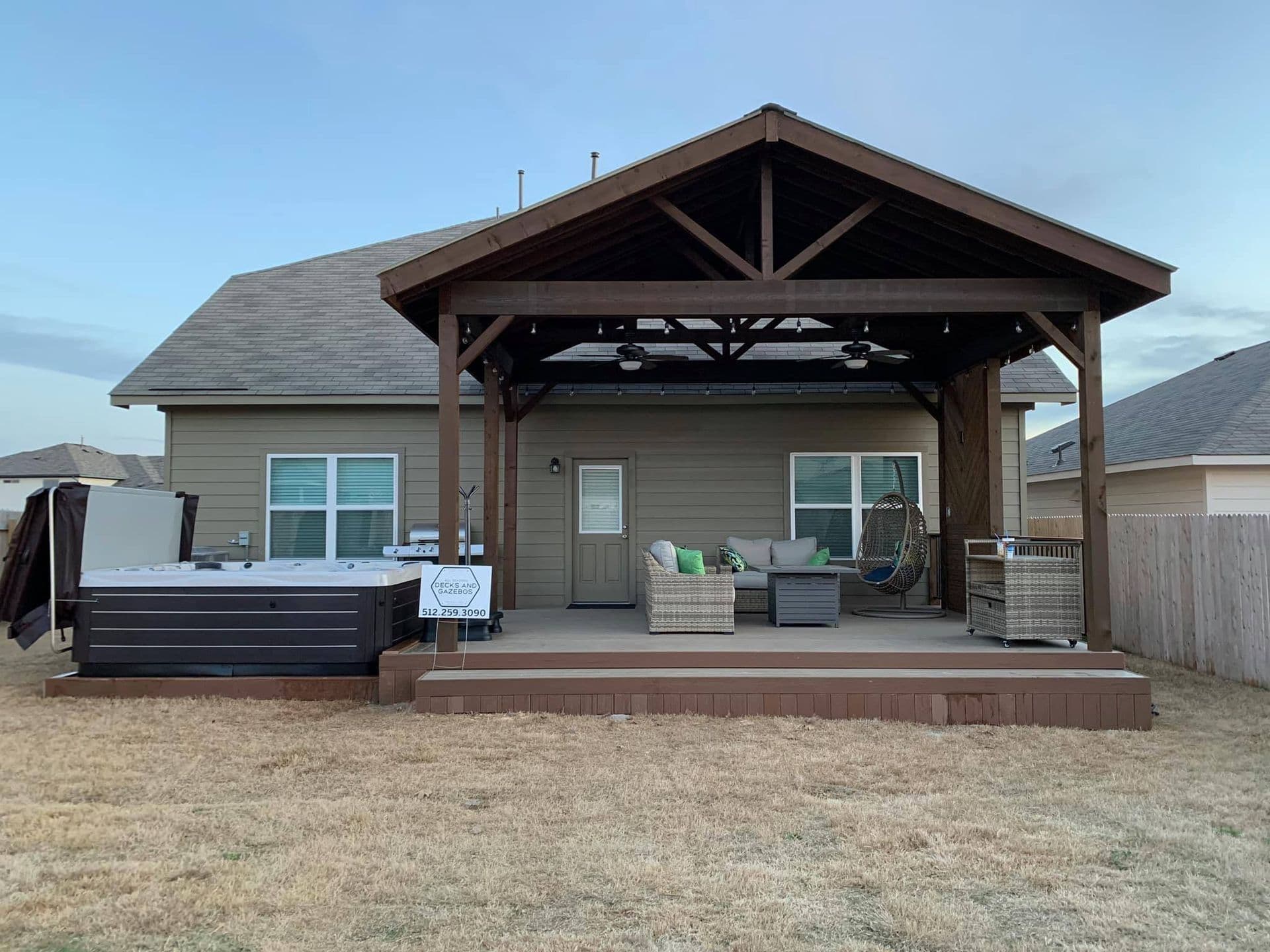
Your Liberty Hill patio cover may or may not need a building permit, depending on where your lot sits. Inside city limits, the City of Liberty Hill permits it through MyPermitNow; in unincorporated Williamson County there is no county building permit, but a lot near the 100-year floodplain still needs floodplain review. Our shop is on County Road 258, so we know which side of that line most local subdivisions fall on.
City limits, county land, and the floodplain
The City of Liberty Hill requires a permit for any construction that physically changes or adds structures, under the 2021 IRC. It also has a Heritage Tree Permit, which matters if a large tree sits near your planned posts.
Outside the city, Williamson County issues no residential building permits. If your lot touches the 100-year floodplain, the county still requires a floodplain Certificate of Compliance or a Floodplain Development Permit before you build. HOAs like Santa Rita Ranch add their own architectural review on top. We confirm all three before design.
Attached or freestanding on a large lot
Liberty Hill lots are often big enough that the best place for shade is not against the house. A freestanding cover out toward the view, with its own posts and footings on every side, can frame a sunset the back door never sees. It costs more than an attached cover of the same size because nothing leans on the house.
Attached covers still make sense on newer homes in Santa Rita Ranch and Stonewall Ranch, where the back patio faces west and the kitchen opens right onto it.
Rock, wind, and roof choice
Most lots here have limestone close to the surface. We drill footings into it, and that rock also drains well, so water under the cover is rarely a problem. Open hilltop lots catch more wind, so posts, beams, and connections are sized for uplift, not just weight.
Cedar beam construction ($45 to $70 per square foot installed) fits the ranch look many Liberty Hill homeowners want, and a 14x24 cedar patio typically runs $28,000 to $38,000. Standing seam metal on cedar posts is the long-life version.
Power, water, and kitchens on acreage
Big lots mean long runs. A freestanding cover 80 feet from the house needs power trenched out to it for fans and lights, and an outdoor kitchen needs gas and sometimes water and a drain. Those trenches cross limestone on most Liberty Hill lots, which takes more equipment and time than digging through topsoil.
We plan every run before we price the job so it is inside your fixed quote rather than a surprise. A covered patio with a full outdoor kitchen, 400+ square feet, typically runs $55,000 to $85,000. On a large lot, the kitchen can sit under the same roof as the seating or under its own smaller cover nearby, and we will show you both layouts.
We Know Liberty Hill Backyards
Our shop is at 2401 Co Rd 258 in Liberty Hill, so this is home ground. Liberty Hill mixes big master-planned communities like Santa Rita Ranch with acreage and older homes outside city limits, and which of those you live in decides who permits your project. We build decks, covered patios, pergolas, gazebos, screened porches and outdoor kitchens across Liberty Hill.
Permits, HOAs, soil and local building tips for Liberty Hill
"Out here the ground is mostly rock with a little dirt on top. That changes the math. A big ground-level patio can cost less than a tall deck, because every footing on a deck means drilling into limestone. And if you've got a view to the west, we'll talk about shade before we talk about boards."
- Mark Toomey
Why Covered Patios Matter Here
In Texas, an uncovered south- or west-facing patio is unusable 6 months of the year. It's simply too hot. A properly designed patio cover can reduce temperatures underneath by 20-30 degrees and cut your home cooling costs by blocking direct sun on windows and doors. It transforms dead space into living space.
Reduce Cooling Costs
A patio cover blocking afternoon sun on windows and doors can noticeably reduce your AC load. We have had customers report 15-20% drops in summer electric bills.
Usable Year-Round
With proper design, your covered patio becomes a three-season room - or four seasons with added features. Rain, shine, or Texas heat, you'll use this space.
Outdoor Kitchen Ready
We coordinate gas lines, electrical, and plumbing during construction. Want a built-in grill, refrigerator, or pizza oven? We plan the infrastructure from day one.
Engineered for Your Home
Proper attachment requires structural engineering specific to your home. We handle the calculations, permits, and inspections - protecting your home and your investment.