Deck Railing Installation in Lakeway, TX
For 40+ years, All Seasons has built custom custom railings for Lakeway homeowners. 5,000+ outdoor projects completed across Central Texas. Fixed pricing, full warranties, same crew start-to-finish.
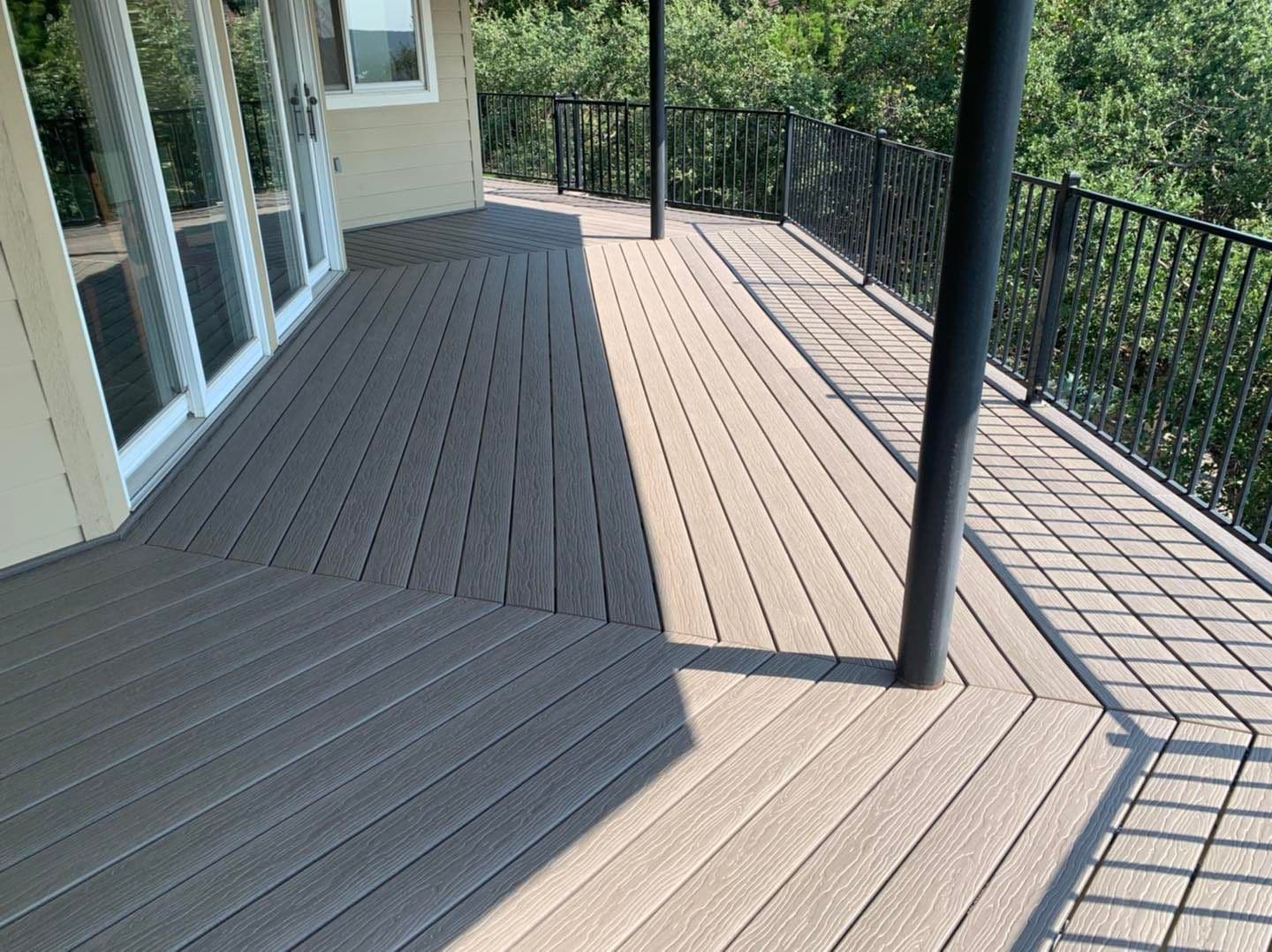
Lakeway decks are about the Lake Travis view, which is why most railing requests here are cable or slim aluminum. Cable railing runs $60 to $100 per linear foot installed and aluminum runs $40 to $70. On steep Lakeway lots decks can be one or two stories above grade on the lake side, so post anchoring matters as much as looks.
Tall Decks on Steep Lakeway Lots
On a lot that falls toward the water, the house side of a deck may be at grade while the lake side is 10 feet or more in the air. The guard on that edge has to resist a person leaning or falling against it, and the IRC design load for a guard is 200 pounds at the top rail. That load is carried through the posts into the rim joist and blocking, not just the railing itself.
When we replace railings on an existing tall deck, we open up the post connections and check them. A new cable rail bolted to a tired rim joist is not an upgrade.
Cable Railing Details That Matter Near the Lake
Cable railing works by tension. Cables are typically spaced about 3 inches apart and pulled tight enough that a 4 inch sphere cannot push between them. Intermediate posts or spacers keep long runs from deflecting. End and corner posts carry all that tension, so they are heavier than the line posts.
Lake Travis is fresh water, but decks near the shore still see more moisture and wind. We use stainless cable and fittings, and we check tension at the final walkthrough. Expect to re-tension occasionally, usually after the first year.
A 60 foot cable railing system typically runs $5,000 to $8,000 installed.
Aluminum Railing Color and Summer Heat
Dark powder-coated aluminum looks sharp against limestone and glass, but on a west-facing lake deck the top rail can get too hot to lean on in summer. A lighter color, or a wood or composite drink rail cap on top of the aluminum, solves it. An 80 foot aluminum run typically costs $4,500 to $7,000.
Permits in Lakeway are issued by the City of Lakeway, and many neighborhoods, including Rough Hollow and Flintrock Falls, also have HOA review. We handle both.
Swapping Old Wood Railings for a View
Many older Lakeway decks have wood railings with wide 2x6 caps and dense balusters. When you sit down, your eyes are close to the height of that cap, so it cuts straight through the lake view.
Replacing railings to current code on an existing deck typically runs $35 to $70 per linear foot installed. Reusing the existing wood posts for cable is rarely a good idea, because posts built to hold balusters were not designed for constant cable tension. Most conversions need new, heavier end and corner posts, which is why cable sits at the top of the price range. If the framing is sound, it is still far less than rebuilding the deck.
We Know Lakeway Backyards
Lakeway lots are built on the limestone hills above Lake Travis, and many of them fall away steeply from the back of the house toward the water or a canyon. That means the deck is often the main way to use the yard at all, and its railing decides what you see from inside. We build hillside decks, covered patios, pergolas, gazebos and outdoor kitchens across Lakeway.
Permits, HOAs, soil and local building tips for Lakeway
"First thing I look at in Lakeway is the view. Which way does the lake sit, where does the sun set. You want the deck oriented to take advantage of that, and railings that don't block it. Hillside builds take more engineering and more pier work than a flat lot, and we price that in up front."
- Mark Toomey
Why Custom Railings Matter Here
Building codes require railings on any deck surface more than 30 inches above grade - but beyond compliance, quality railings prevent accidents and add significant visual appeal. A well-designed railing system can make your deck feel like a true outdoor room while keeping children, pets, and guests safe.
Code Compliant
Every railing we install meets or exceeds local building codes for height, baluster spacing, and load requirements. We handle permits and inspections.
Multiple Material Options
Choose from wood, composite, aluminum, cable, glass, or metal railings. We help you find the perfect balance of aesthetics, maintenance, and budget.
View Preservation
Cable and glass railing systems maintain unobstructed views while providing safety. Perfect for hillside decks and pool areas.
Coordinated Design
We design railings that complement your existing deck, porch, or home architecture. Every detail matters.