Deck Builders in Taylor, TX
For 40+ years, All Seasons has built custom custom decks for Taylor homeowners. 5,000+ outdoor projects completed across Central Texas. Fixed pricing, full warranties, same crew start-to-finish.
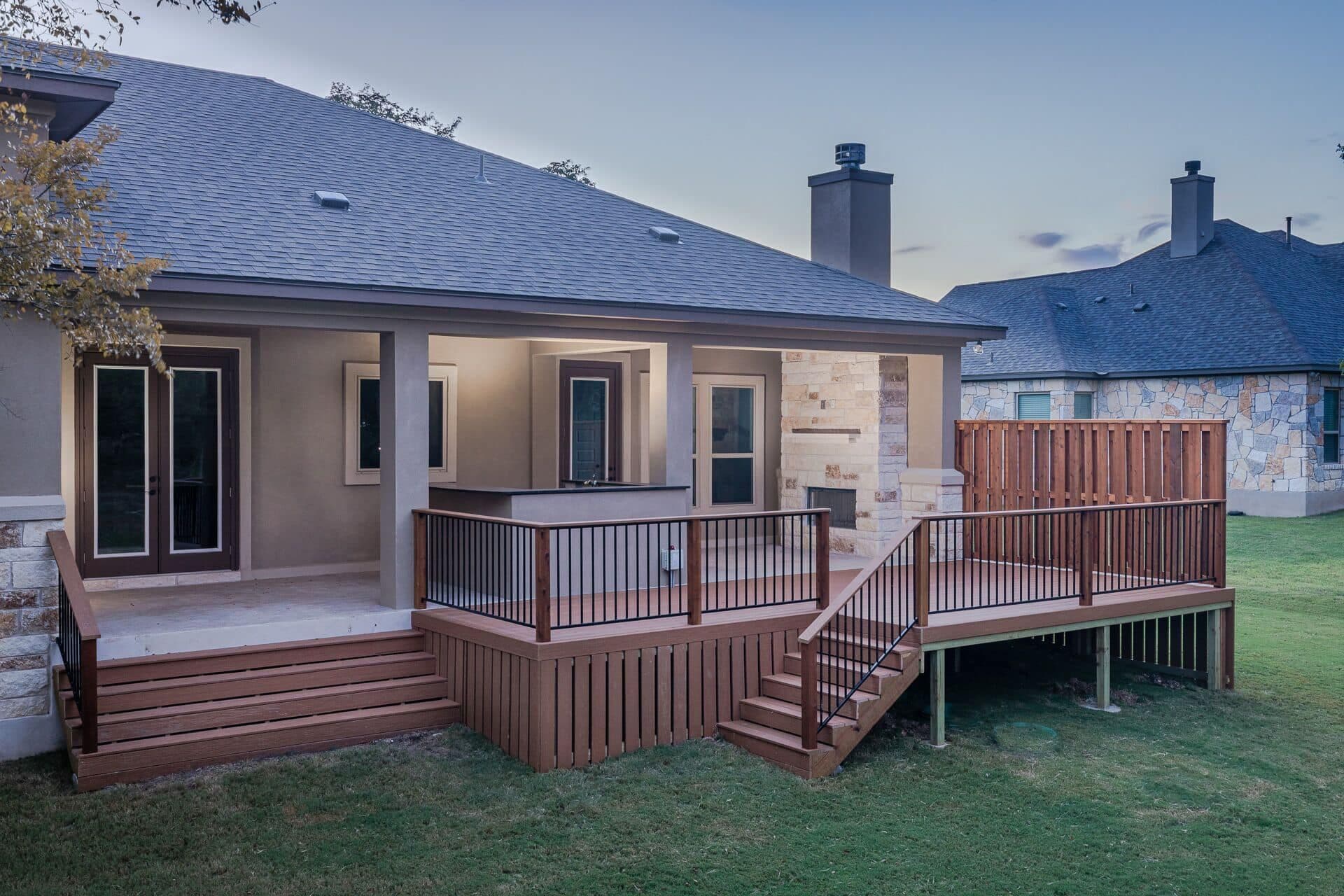
All Seasons Decks builds decks in Taylor for older homes near the historic downtown and for the newer houses going up on the edges of town. Taylor sits deep in Blackland Prairie clay, and many older homes here are raised pier and beam, so a Taylor deck has to deal with moving soil and a back door that may sit well above the yard. Permits are issued by the City of Taylor.
Decks for Older Pier and Beam Homes
Many of Taylor's older houses sit two or three feet off the ground on piers. A deck off the back door at that height needs guards, stairs built to code, and a solid ledger connection. The house itself moves a little on its piers as the clay shifts, so we often build a freestanding deck with its own beam and posts next to the house. That keeps the deck from pulling at an older rim board and keeps the two structures from fighting each other.
Wood suits many of these homes. Pressure-treated pine at $15 to $25 per sq ft or cedar at $30 to $45 fits a traditional look, and painted railings can match existing porch trim.
Taylor Clay and Footing Depth
Taylor clay is some of the most expansive in the region. It swells and heaves after rain and shrinks and cracks in summer. We set footings below the active layer and slope the grade away from both the house and the deck so water does not sit under the framing. Skipping this step is the fastest way to a deck that leans within a few summers.
Newer Homes and Fewer HOAs
Taylor has fewer HOA-governed neighborhoods than the fast-growing suburbs to the west, so homeowners have more freedom on design and color. Some newer developments do have architectural guidelines, and properties in the historic district may have added review. We check before we design.
For newer slab homes, a low composite deck is the usual fit. A 12x16 deck runs $12,000 to $16,000 and a 16x20 composite deck runs $20,000 to $28,000.
Building for Heat and Hail
Taylor lots are open and flat, and spring hail and summer sun hit them hard. Composite shrugs off both better than softwood. On a wood deck, a quality sealer every 2 to 3 years is what keeps boards from checking and splintering.
Newer construction in Taylor has picked up with recent growth around town, and those homes mostly sit on slabs over the same expansive clay. The rules for a good deck are the same as on an older house: deep footings, a frame that does not bind against the slab, and drainage that keeps water from pooling under the boards. The design is simpler because the deck sits low, which usually keeps it under the 30 inch height where guards become required.
After a hail storm, walk the deck and look for split boards. A split softwood board lets water into the frame below and should be replaced before the next rainy season.
We Know Taylor Backyards
Taylor is an old railroad and cotton town on Blackland Prairie clay, with early 1900s homes near downtown and new subdivisions spreading out as Samsung's plant draws people east. Older houses and new builds need different approaches to attaching a porch or deck. We build covered porches, decks, pergolas, gazebos and patio covers in Taylor.
Permits, HOAs, soil and local building tips for Taylor
"Taylor's got older homes downtown and new development on the edges. Different approach for each. An old pier-and-beam house needs a porch that fits the house, usually wood, traditional details. The newer builds, we usually go composite. And the clay out here is serious, so footings get extra attention no matter what."
- Peter Toomey, Founder
Why Custom Decks Matter Here
A well-built deck adds 70-80% of its cost back to your home value - one of the highest ROIs of any home improvement. But a poorly built deck becomes a liability: wood rot, unstable railings, even detachment from the house. In Texas, where we swing from 20 degrees to 105 degrees in a single year, proper engineering isn't optional.
Engineered for Texas Extremes
Our deck designs account for 100+ degree surface temperatures, freeze-thaw cycles, and the expansion/contraction that destroys poorly built decks. We've refined these details over 5,000 projects.
Written Workmanship Warranty
We back our workmanship for a full year and your materials carry manufacturer warranties up to 50 years. That's confidence earned from four decades of standing behind our work. Most contractors won't even put their warranty in writing.
We Handle Everything
Permits, HOA architectural review, utility locates, inspections - it's all included. You approve the design and we take it from there. No project management headaches for you.
Same Crew, Start to Finish
No subcontractors, no rotating workers. The experienced team that starts your deck finishes it. They take pride in their work because their name is on it.